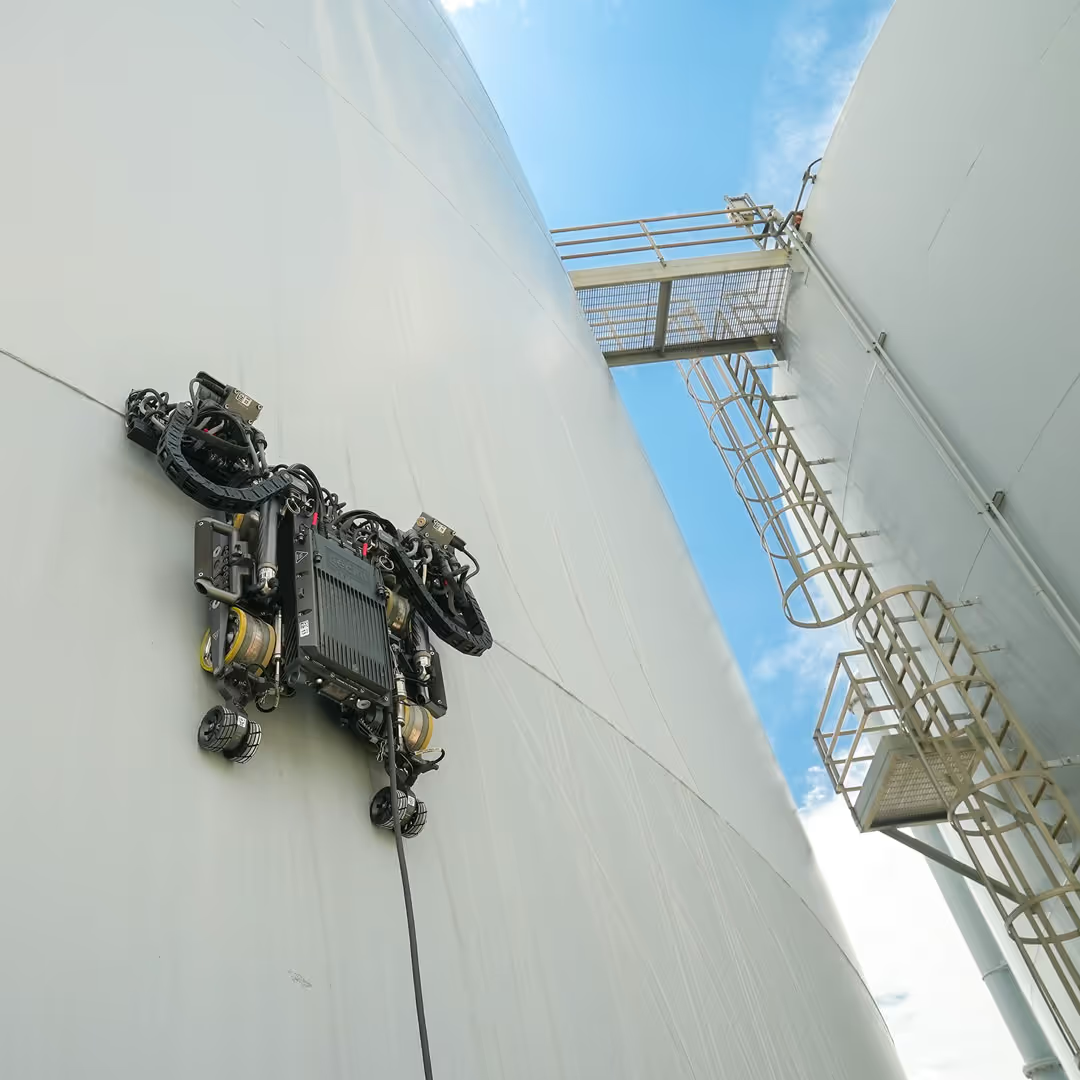
Gecko Robotics' published tank-inspection demonstration shows its Toka 3 robot performing nondestructive testing on a large tank. Its current Cantilever offering extends the story from a climbing machine to an asset-data platform. Neither source establishes a fully autonomous municipal water system. Together they illustrate a narrower and more useful development: robots can collect physical-condition evidence from structures and connect it with the record used to plan their upkeep. For water operators, that is potentially valuable without implying that a robot should control treatment or distribution. Gecko Toka 3 tank inspection demonstration; Gecko Cantilever platform.
A tank is a structure and part of a system
A storage tank has at least two kinds of importance. Its walls, roof and supporting structures have a condition that can be inspected. Its role in the network depends on flows, service areas, redundancy and operating state. A detailed surface survey addresses the first category. It cannot, on its own, determine the consequences of removing that tank from service. That requires the asset record to connect the physical structure with its operational role. The challenge is not solved by increasing the number of measurements if those measurements remain detached from the operator's actual equipment hierarchy.
Gecko also markets aerial surface scanning, including confined-space applications, as part of its wider inspection offering. This makes the sensor distinction important. A surface image, a geometric model and an ultrasonic thickness measurement are different observations, with different limits. A platform can display them together without making them interchangeable. A photograph may reveal an area requiring closer examination; it does not automatically provide the same information as a contact measurement. The appropriate reporting language identifies what was measured and by what method, rather than treating every robot visit as a complete structural assessment. Gecko aerial surface scanning.
The connection to water resilience is conditional
The useful lesson for a water utility is about evidence organization, not a claimed Gecko deployment at a particular water district. If an inspection identifies an area of concern, the operations team needs to know which asset it belongs to, whether the finding is new, and what service would be affected by repair. An incorrect identifier can send a crew to the wrong structure or leave a finding without an owner. A shared map can reduce that ambiguity only if updates to the physical system also update the digital record. Replacement equipment, renamed sites and altered service connections all make this a continuing task.
Autonomy can help collect evidence at a cadence that is difficult to sustain manually. That does not imply that every observation deserves immediate operational action. A stable condition may require trend monitoring. An uncertain measurement may require confirmation. A rapidly changing condition may justify escalation. The value lies in distinguishing these cases. If every variation becomes an emergency, automation can overwhelm the people it is intended to support. If the platform automatically suppresses inconvenient uncertainty, the apparent reduction in workload becomes misleading. Both failure modes are possible even when the robot itself functions correctly.
Resilience includes the record of decisions
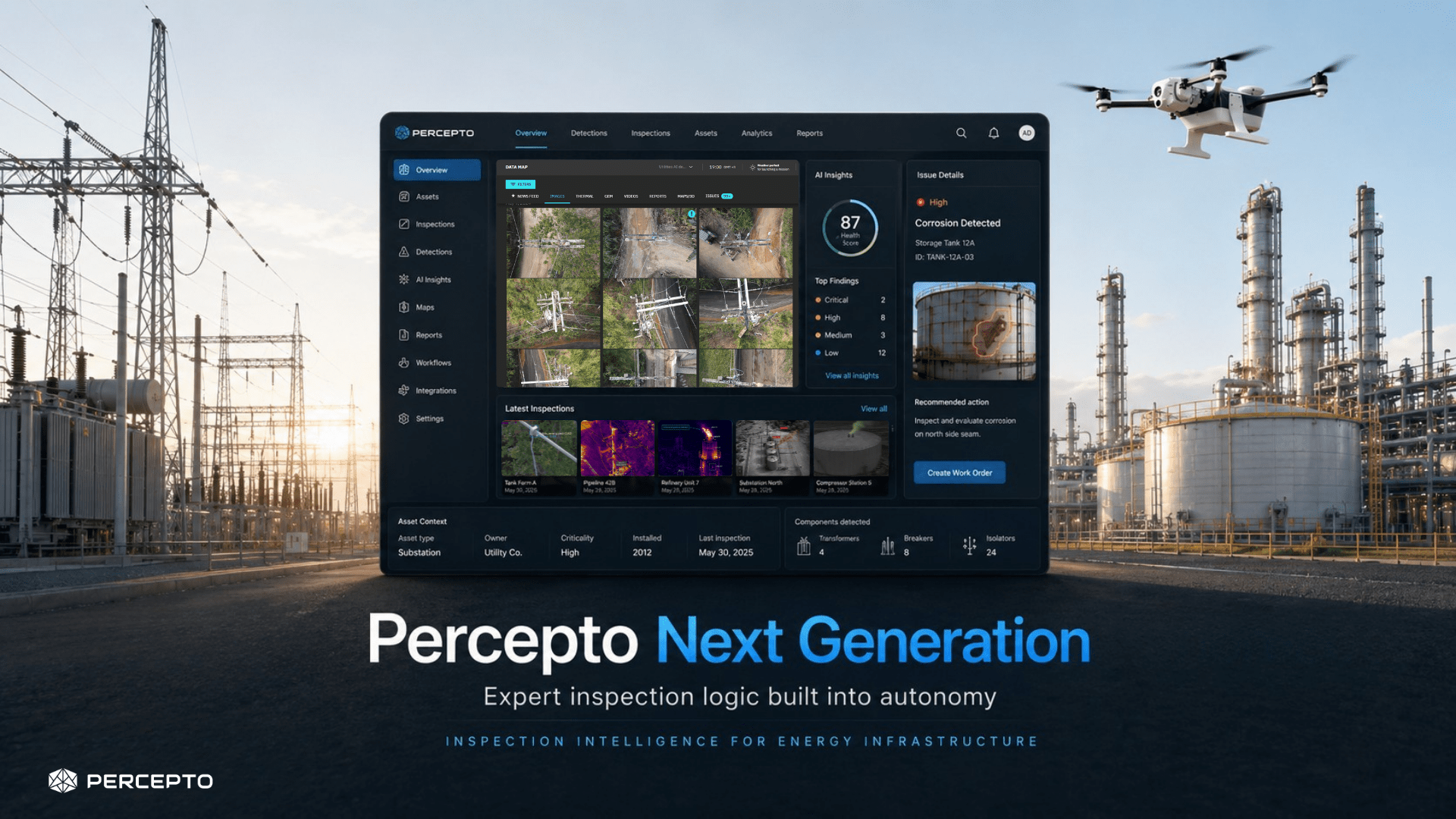
A defensible maintenance history records the evidence considered, the action selected and the reason for deferral where work was postponed. That history is useful during ordinary planning and especially when staff change or an incident interrupts normal routines. A robot-generated dataset should strengthen it rather than create a separate technical archive accessible only to a vendor specialist. Gecko's hardware-to-software approach makes this handoff visible, while the water-system context shows its limit. Inspection autonomy can improve knowledge of a structure. The operator still needs a system-level account of how that structure supports a public service, and who is authorized to change that service when the evidence calls for action.
A water operator considering autonomous monitoring faces a basic question before choosing an algorithm: which devices, connections and people influence the process today? Without that inventory, new automation can add an invisible dependency to a service whose continuity depends on understanding how equipment behaves. EPA provides a resilience assessment checklist with a cybersecurity component. EPA small-system resilience assessment.
Separate observation from control
An initial deployment can be narrowly observational. Reading a level or identifying an unusual pattern does not require granting permission to change a pump or valve. Separating those capabilities makes the first operating case easier to evaluate and gives staff time to understand the quality of the machine's information.
The inventory should include remote support and temporary connections, not only equipment listed on a drawing. A supplier's diagnostic channel may be essential during a fault. It is also a relationship that needs an owner, an access rule and a clear procedure for ending or changing the arrangement. NIST's Cybersecurity Framework 2.0 explicitly includes governance. NIST Cybersecurity Framework 2.0.
Keep the operating knowledge local
Operating knowledge must remain available when the supplier cannot connect. Staff should know what information the automation uses, what a missing reading means and how to recognize a degraded service. These are practical requirements for continuity, rather than an argument that every facility needs the same technology or staffing model.
Expansion should follow evidence that the observational system is reliable and useful. Any move into control deserves a separate decision about authority and recovery. A deliberate sequence can make autonomy understandable to the people responsible for the service, which is more valuable than adding features faster than the organization can explain them.
Sources & evidence
This archive preserves its original editorial date. Sources describe the events and announcements discussed; they do not establish today’s status.