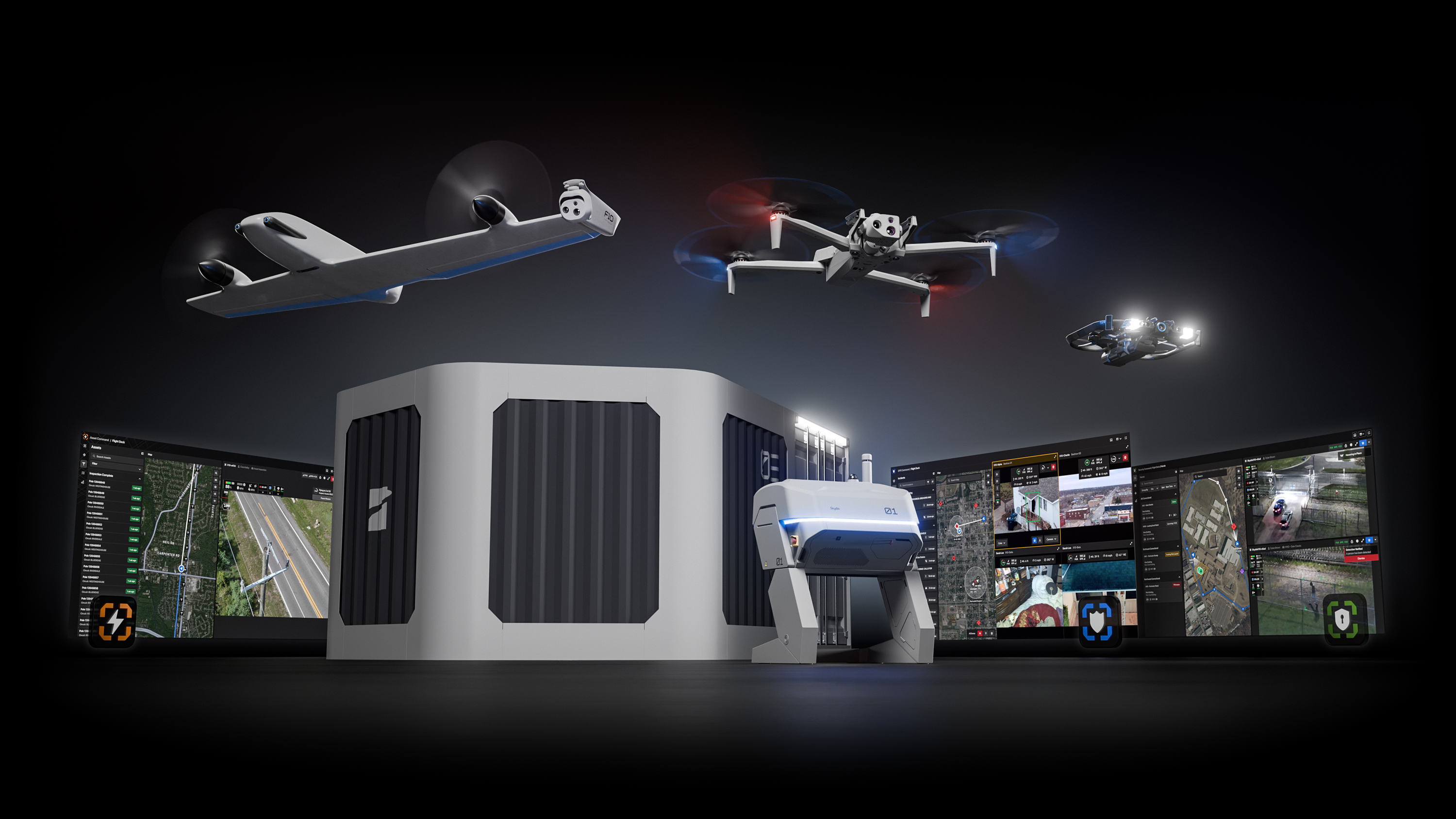
Skydio's September 2026 announcement introduced F10 Lightrunner, MegaDock and new command software as an expansion of its autonomous-drone platform. The announced F10 customer timeline extends into 2027, so it should not be described as a mature installed emergency-response fleet in October 2026. The direction is clear: larger areas and more coordinated operations are becoming part of the product proposition. For infrastructure owners, that makes the evidence collected before an incident more important, not less. Skydio F10, MegaDock and command software, September 2026.
An emergency changes the assumptions of an ordinary mission
A routine inspection may rely on a familiar launch location, clear access, a working communications link and an asset map that has not changed much since the previous round. Fire, flooding, structural damage or a power failure can alter several of those conditions together. The aircraft's ability to fly farther does not establish which of those assumptions remain valid. The organization needs a record of the normal site and an explicit way to distinguish old information from new observations as conditions change.
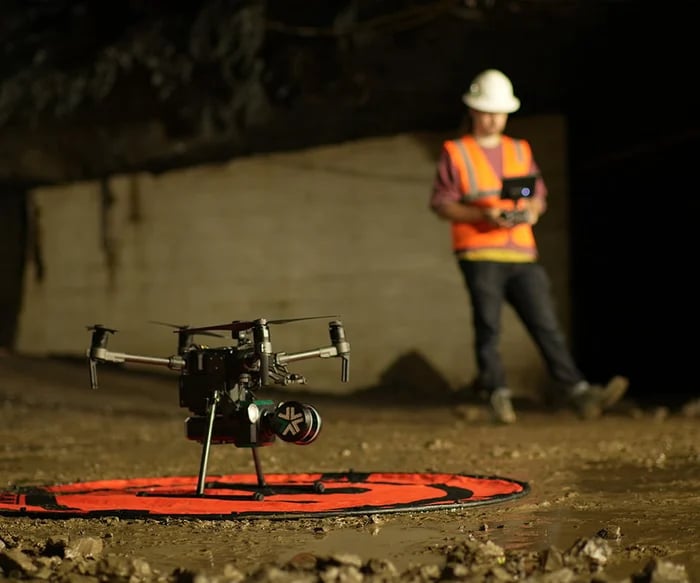
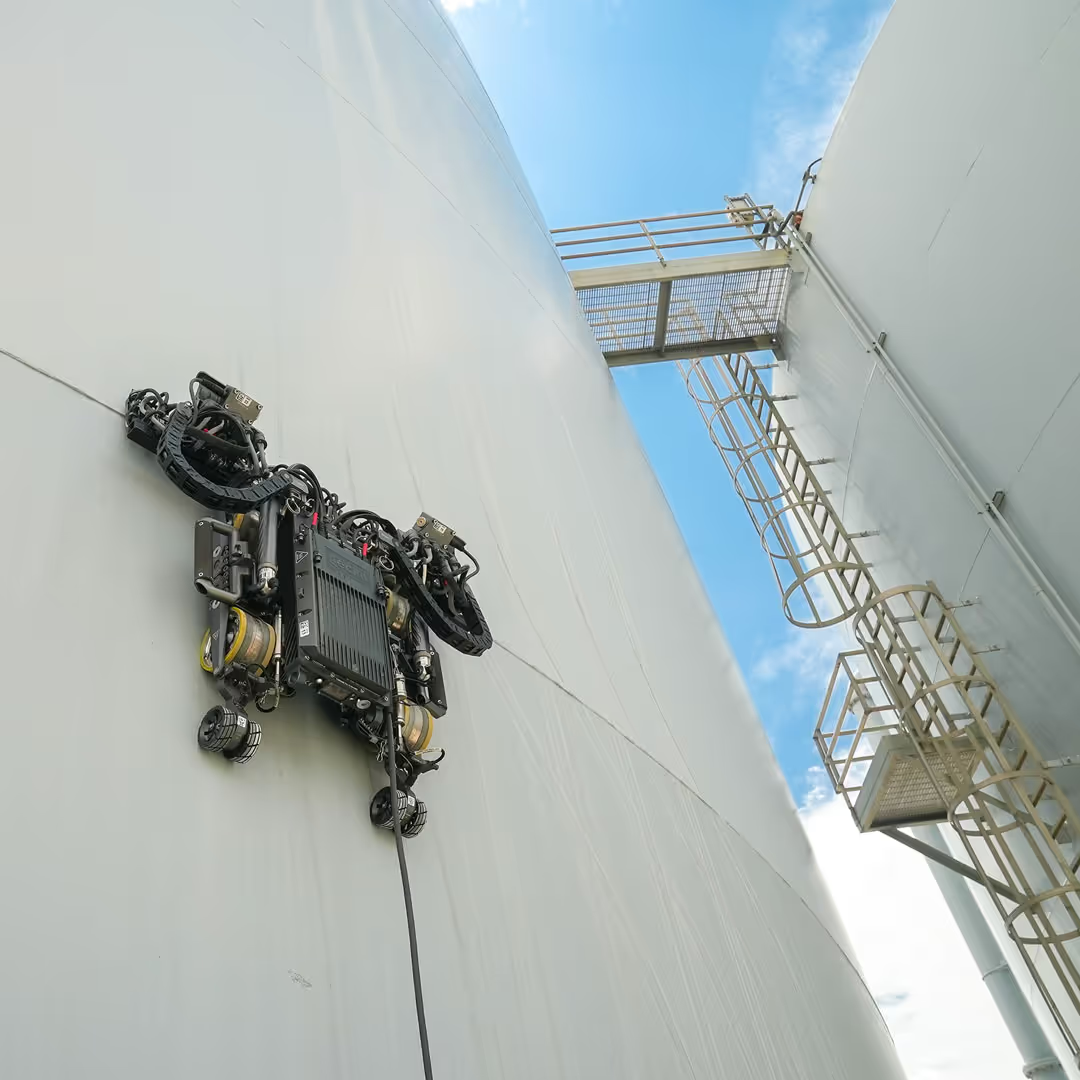
Exyn's product approach illustrates a contrasting emphasis: autonomy for complex environments where ordinary positioning infrastructure may not be available. ANYbotics' RTE evaluation illustrates another: testing a ground robot in representative electrical installations before wider use. These are different systems, not a head-to-head performance comparison. Together they show why emergency readiness is scenario-specific. A capability demonstrated in one environment should not be generalized to another simply because both platforms are described as autonomous. Exyn mapping platforms; ANYmal evaluation at RTE, February 13, 2023.
The baseline needs more than a map
A useful pre-incident record includes asset identity, normal appearance, accessible observation points and known gaps. It also records the conditions under which those observations were made. That allows responders to compare new evidence with a relevant baseline rather than an undated image. The record should identify what cannot be determined remotely. A drone may establish that an area is obstructed while leaving the condition behind the obstruction unknown. Making that limit explicit helps incident commanders avoid converting a partial view into an unjustified all-clear.
Pre-incident practice has a similar role. Teams need experience interpreting the system's uncertainty and deciding when a mission should be changed or abandoned. A demonstration in ideal conditions does not reveal how an operator responds when several incoming views disagree or when a previously useful route is unavailable. The training value comes from those decision points, not merely from rehearsing a normal launch. Automation can remove some control burden while making the remaining judgments more consequential because they occur in exceptional circumstances.
Readiness is a maintained capability
The product roadmap can inform planning, but an emergency procedure should be based on equipment, permissions and skills that actually exist. As aircraft and software change, the procedure needs review. Otherwise, the organization may retain instructions for a previous version or assume that a promised feature has arrived. Skydio's platform expansion is newsworthy because it widens the possible role of remote aerial observation. Its practical implication is that infrastructure teams should treat evidence, training and recovery procedures as maintained assets alongside the drone itself. The measure of readiness is a dependable decision under disrupted conditions, not the size of the planned fleet.
An autonomous inspection or response system may be purchased for an event that rarely occurs. That makes routine operational data an incomplete basis for confidence. The organization needs a rehearsal programme that tests the decisions, information flows and recovery arrangements likely to matter when normal access or staffing is disrupted. NIST develops repeatable tests for response-robot capabilities. NIST Ground Robot Tests.
Rehearse the decision, not just the movement
Exercises should begin with specific questions. Can the system establish whether a route is passable, locate a damaged asset or provide an interpretable observation to the response team? A broad demonstration of mobility is useful only if it connects to the decision the emergency organization actually needs to make.
Evidence from research demonstrations should retain its context. A successful mission in a prepared environment does not establish performance under every combination of debris, weather and communications loss. It can inform an exercise plan while leaving the local organization responsible for examining its own operating conditions. NASA's ISAAC research combined robotic inspection with spacecraft subsystem telemetry. NASA ISAAC autonomous caretaking research.
Preserve uncertainty under pressure
During a rehearsal, record what the system could not determine as carefully as what it found. Response leaders need uncertainty to remain visible under pressure. An unresolved observation should lead to an explicit alternative plan rather than being lost inside a summary that implies the mission was complete.
The resulting capability statement can be narrow and still valuable. It should identify tested tasks, required support and known limits. That gives responders a service they can plan around and prevents an aspirational procurement description from becoming an unsupported assumption at the moment when failure would be hardest to manage.
That preparation has a practical staffing dimension. A named primary operator may be unavailable when the incident occurs. The organization needs another person who can interpret the display, understand the current permissions and locate the relevant evidence. A technically available aircraft is not an available response capability if only one absent specialist knows how to use it.
Sources & evidence
This archive preserves its original editorial date. Sources describe the events and announcements discussed; they do not establish today’s status.