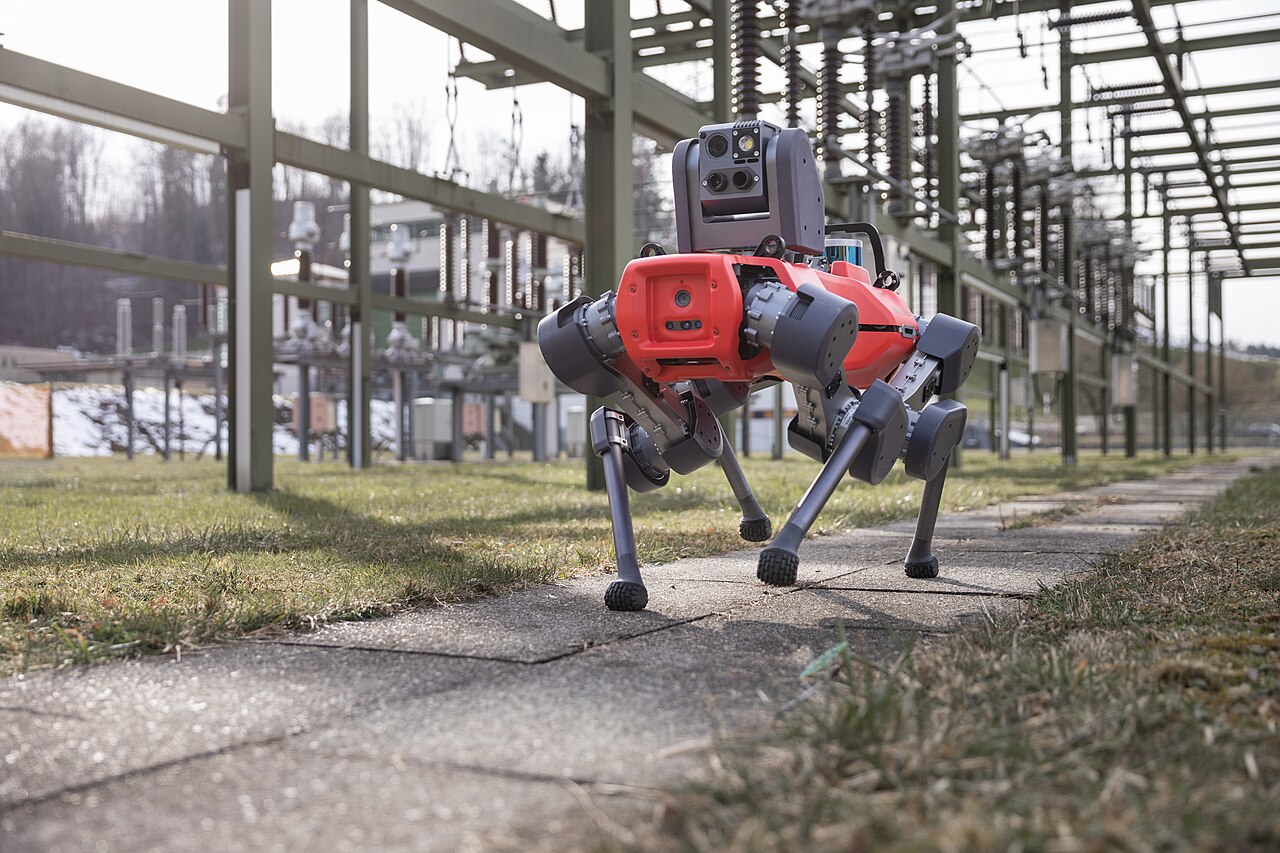
ANYbotics' February 2023 account of its RTE collaboration described an evaluation at Campus Transfo, the French transmission operator's training and innovation facility. ANYmal operated at representative installations and gathered several kinds of inspection data. The setting matters: this was a structured evaluation of capability and maturity, not evidence that autonomous robots had taken over inspection across France's transmission network. It offers a concrete basis for examining what repeated robotic rounds can and cannot establish. ANYmal evaluation at RTE, February 13, 2023.
The route is only one part of the measurement
The RTE account describes preconfigured missions and observations including thermal, visual and acoustic information. A repeated route can help standardize where the robot looks, but an electrical asset's operating state can change between visits. A temperature observed under one load is not automatically comparable with a temperature observed under another. A useful historical record therefore needs both the reading and enough context to interpret it. Navigation repeatability reduces one source of variation; it does not remove all the others. That distinction explains why the software surrounding an inspection robot has become increasingly important.
The October 2026 Shift update explicitly adds operating context from plant systems to the inspection workflow. Earlier, ANYbotics' 2024 Energy Robotics partnership addressed integration with another robotic data platform. The chronology is instructive: first demonstrate that the robot can reach and observe the relevant equipment, then make the observation useful within a continuing operational record. These are related achievements, but they should not be reported as the same milestone. The later software announcement does not change the evidentiary status of the earlier evaluation. Data Navigator becomes Shift, October 2026; ANYbotics and Energy Robotics partnership, June 12, 2024.
Change detection needs a stable comparison
A condition-monitoring system should distinguish at least three situations: a meaningful physical change, a normal response to changed operating conditions, and a difference caused by how the observation was made. The third category can be surprisingly important. A sensor replacement, a revised viewpoint or an altered processing method may shift the baseline. If the platform treats that shift as equipment deterioration, it can create unnecessary work. If it normalizes too aggressively, it can conceal an emerging problem. Maintaining an explicit history of measurement changes lets engineers understand why a trend moved.
The same principle applies to missing readings. A robot that skips an inaccessible target should not produce a reassuring appearance of continuity. The gap may matter more than the successful completion of the rest of the route. A useful report shows the last valid observation and the reason the latest one was not obtained. This allows the team to decide whether the missing evidence can wait, whether another sensor can help or whether someone needs to inspect the asset directly. Autonomy becomes a way to organize attention rather than a promise that attention is no longer needed.
The deployment question comes after the demonstration
RTE's evaluation established a setting in which robotic inspection could be examined under representative conditions. Wider adoption would require evidence about routine reliability, support and integration at the actual sites involved. The distinction is not a criticism of the pilot; it is what makes the pilot useful. Its results can identify where additional work is justified and which assumptions need testing. The long-term value of ANYmal-style inspection is a comparable record of condition, assembled with less repetitive field effort. The robot's ability to retrace its steps is an enabling capability. The ability to explain what changed, and why the change matters, is the operational product.
Autonomous inspection makes repeated visits easier to schedule. It does not by itself make the resulting measurements comparable. A sensor can arrive at the same waypoint while facing a different angle, encountering another temperature or observing equipment in a different operating state. Those differences matter when the goal is detecting change. FRA uses automated inspection data to inform maintenance and manual inspection. FRA Automated Track Inspection Program.
Control the collection context
The collection record should therefore describe the conditions that make comparison meaningful. Depending on the task, that can include viewpoint, distance, operating state and the version of the processing method. The exact fields should follow the inspection question instead of becoming a generic pile of metadata nobody uses.
Acceptance testing can repeat the same observation under deliberately varied conditions. The aim is to learn which differences the system can tolerate and which should trigger review. A reliable inspection service needs those boundaries stated plainly enough that ordinary operators can recognize when a reading falls outside them. NIST develops repeatable tests for response-robot capabilities. NIST Ground Robot Tests.
Keep the comparison honest
Historical records also need care when the model changes. Reprocessing an old image can produce a new interpretation without any physical change in the asset. Keeping the original observation and the processing history separate allows a reviewer to understand why a trend line shifted.
The payoff is an inspection history that remains interpretable over years rather than only within one software release. Infrastructure owners should ask how a supplier preserves continuity through sensor replacement, route changes and model updates. Repeated autonomy becomes valuable when repeated evidence can support a defensible comparison.
Sources & evidence
This archive preserves its original editorial date. Sources describe the events and announcements discussed; they do not establish today’s status.