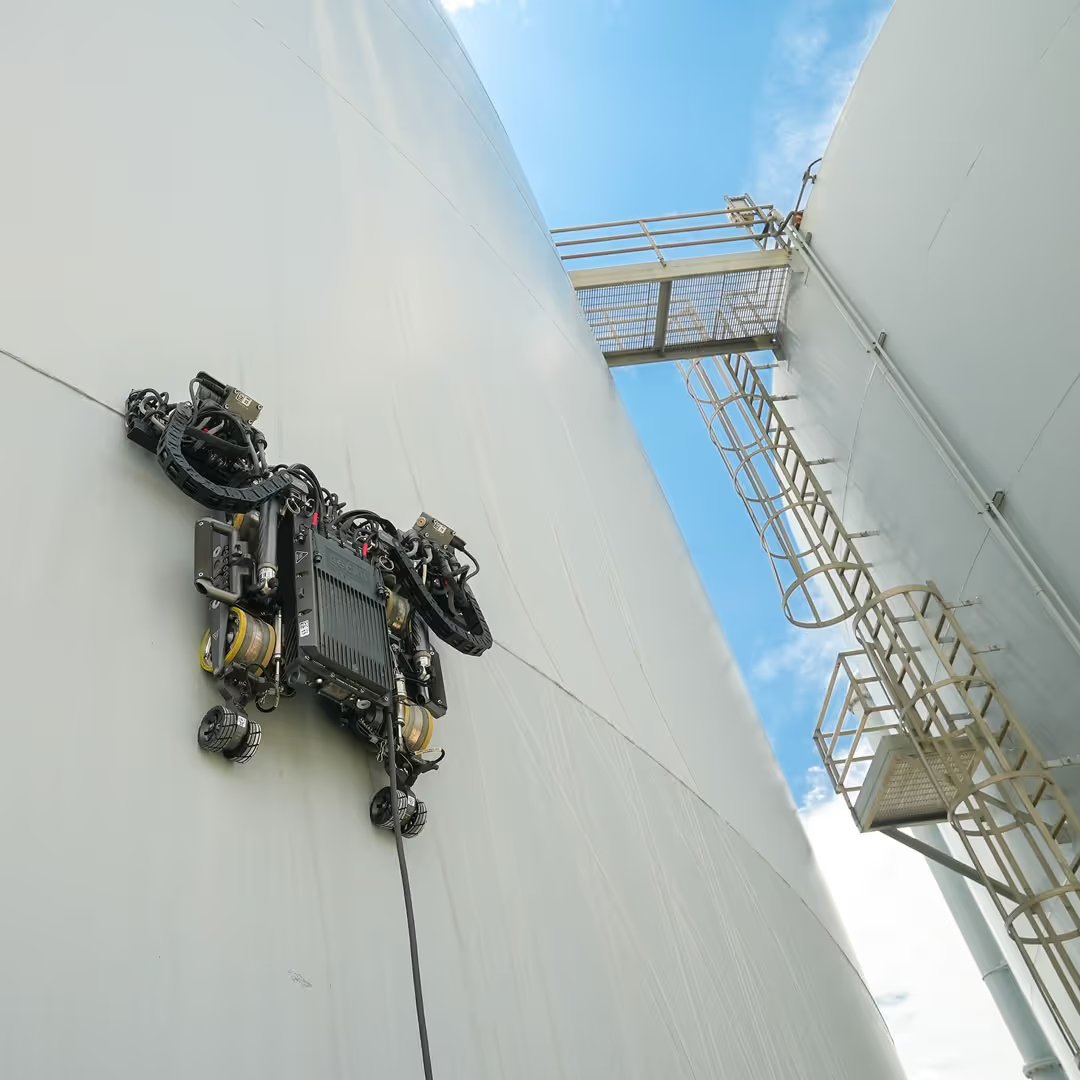
Gecko Robotics presents Cantilever as the software layer that brings robot-collected evidence into decisions about infrastructure. Its tank-inspection demonstration gives that claim a physical starting point: a robot performs nondestructive testing on a structure that must continue serving an industrial purpose. The important output is not simply a dense dataset. It is an account of condition that can support a choice among continued monitoring, targeted repair and more extensive work. Those choices carry different consequences, so uncertainty needs to travel with the measurement. Gecko Cantilever platform; Gecko Toka 3 tank inspection demonstration.
Data density and decision confidence are different
Collecting more measurements can reveal local variation that a sparse survey misses. It can also produce more anomalies requiring interpretation. A small area of unusual readings might represent a material condition, an access problem or a measurement artifact. The software should help the reviewer distinguish these possibilities. A smooth colored surface map can be a useful summary, but it is not a substitute for knowing where the data came from and where confirmation is needed. The maintenance decision is stronger when the evidence includes its own limitations rather than presenting every area as equally certain.
Gecko's September 28, 2026 NVIDIA collaboration adds another dimension. The companies described work on runtime boundaries intended to keep AI-directed robotic actions within human-defined permissions. That is a control architecture, not a certification that every resulting maintenance recommendation is correct. It nevertheless makes an important distinction explicit: a model may propose an action while another mechanism determines whether the action is permitted. The same separation is useful in inspection workflows, where a detected condition, a recommended repair and authorization to execute the repair should remain identifiable steps. Gecko and NVIDIA controls collaboration, September 28, 2026.
The repair is part of the evidence chain
Suppose an inspection leads to a targeted intervention. The original measurement should remain connected to the work performed and the evidence gathered afterward. Otherwise, a later reviewer may be unable to tell whether the condition changed because of repair, a different measurement method or an altered asset configuration. A useful platform preserves that chronology. It should also record cases in which an engineer rejected an initial recommendation. Such decisions can reveal where the data was insufficient or where an operational constraint changed the preferred response.
This is where the business case for inspection software becomes more specific. Faster collection can save field time, but the larger value may come from narrowing a repair scope or avoiding an unnecessary repeat visit. Those outcomes cannot be inferred from the number of robot missions. They need to be documented at the asset level, with the alternative action and the evidence supporting the choice made clear. Without that comparison, a claim of savings can simply attach a large hypothetical cost to every detected anomaly.
Unknown is a useful operational result
A system that marks an area as requiring another measurement has not necessarily failed. It may have correctly recognized the limit of the available evidence. That behavior becomes especially important when software is encouraged to automate more of the workflow. The pressure to close every case can create false precision. Gecko's hardware-and-software approach is significant because it connects collection with the place where decisions are made. Its practical test is whether that connection helps engineers manage uncertainty, including deciding when a robot's result is insufficient. More autonomous inspection should mean better-directed follow-up, not an obligation to pretend that every condition has already been resolved.
An autonomous inspection system faces a choice when evidence is poor: report uncertainty or force a classification. For infrastructure owners, the first option is often more useful. A clear statement that a component could not be assessed preserves the chance to obtain better evidence before a maintenance decision is made. NASA's ISAAC research combined robotic inspection with spacecraft subsystem telemetry. NASA ISAAC autonomous caretaking research.
Distinguish unknown from normal
The interface should distinguish 'no abnormality found' from 'insufficient information.' Those statements can lead to different actions and should not share the same reassuring icon. Poor lighting, a blocked view or an unfamiliar component may justify another observation without implying that the equipment itself is defective.
Combining different observations can help, but agreement should not be assumed. A visual reading and a subsystem measurement may describe different moments or different aspects of a machine. The reviewer needs enough context to understand whether they corroborate each other or merely appear together on the same dashboard. FHWA describes drones as supplementary tools with limits on physical examination. FHWA bridge inspection questions and answers.
Assign the next observation
An uncertainty report should produce a concrete next step. That might be another angle, a different sensor or a person with appropriate expertise. Without an owner and a deadline, uncertainty can become a permanent category in the database rather than a temporary state in a working inspection process.
The business case should include this follow-up workload. Autonomy that identifies its limits honestly may appear less decisive in a demonstration, yet produce more dependable maintenance records. The relevant question is whether it improves the quality and timeliness of decisions, including the decision that the available evidence is not yet sufficient.
Sources & evidence
This archive preserves its original editorial date. Sources describe the events and announcements discussed; they do not establish today’s status.