Gecko Robotics' October 8, 2026 partnership announcement with Anduril spans two stages of maritime manufacturing. Anduril says it is already integrating Gecko's nondestructive testing technology into production workflows at its Orange County protofactory. The companies also plan to carry the approach into the future Arsenal-2 shipyard in Maryland. The immediate autonomy question is how inspection evidence becomes a dependable handoff between manufacturing operations. Gecko and Anduril's announcement.
Orange County is the starting point, Arsenal-2 the extension
The release identifies the California protofactory as a 160,000-square-foot facility for submarine components. Anduril's statement describes work to connect Gecko's technology with ArsenalOS, its manufacturing software. That is an attributed report of integration under way, not merely an agreement awaiting all implementation. It is also different from a claim that the planned Maryland shipyard is already in full production. The companies' stated deployment stages.
Those stages create different questions. At the first facility, the issue is whether inspection information fits the real sequence of manufacturing decisions. At a subsequent facility, the question becomes how much of that configuration can transfer. Reusing a software interface may be straightforward while reproducing measurement quality, work instructions and acceptance practices requires further qualification. The relevant scale advantage is not just having another robot available; it is retaining a trustworthy process as equipment, personnel and site conditions change.
The product is an inspection record as well as a scan
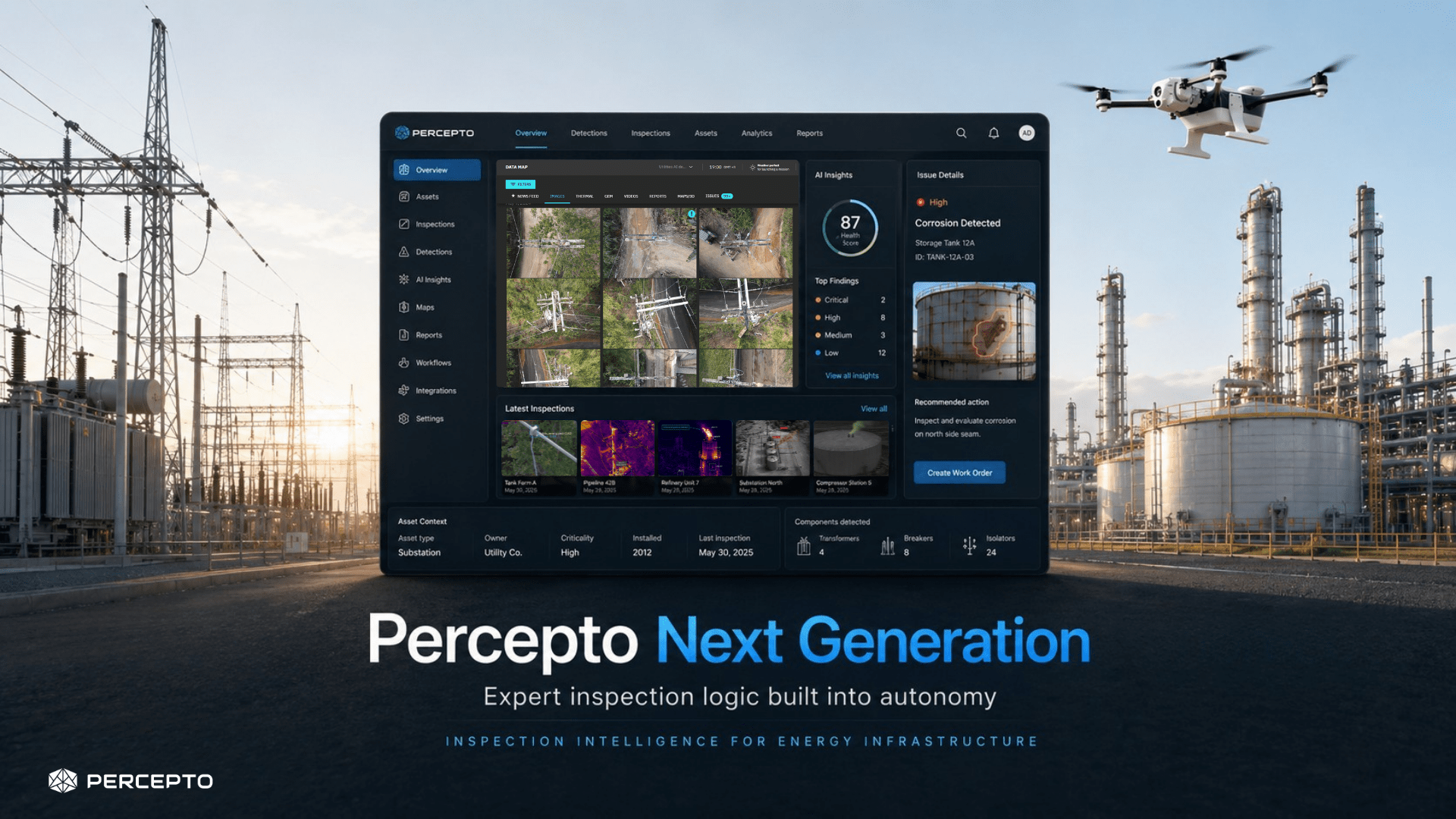
Gecko's Cantilever platform organizes robot-collected information around physical assets. Its aerial-scanning offering is another example of the company's attempt to connect capture, processing and reporting. In manufacturing, that connection has a different urgency from a periodic condition survey. A component may be waiting for acceptance before it can move forward. Delayed review can hold up downstream work; a premature acceptance can carry an unresolved problem into a more expensive stage. The useful automation therefore includes the quality of the handoff, not just the speed of measurement. Gecko Cantilever platform; Gecko aerial surface scanning.
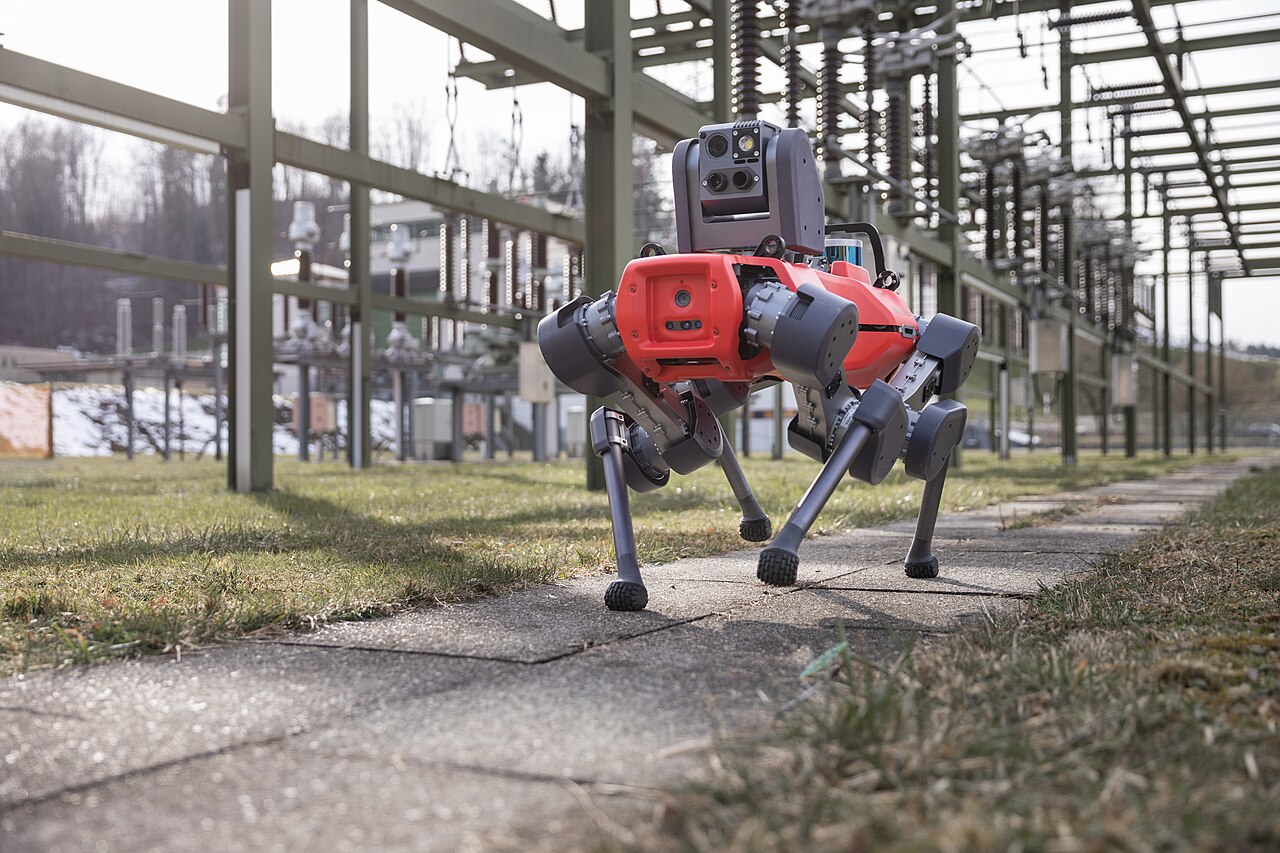
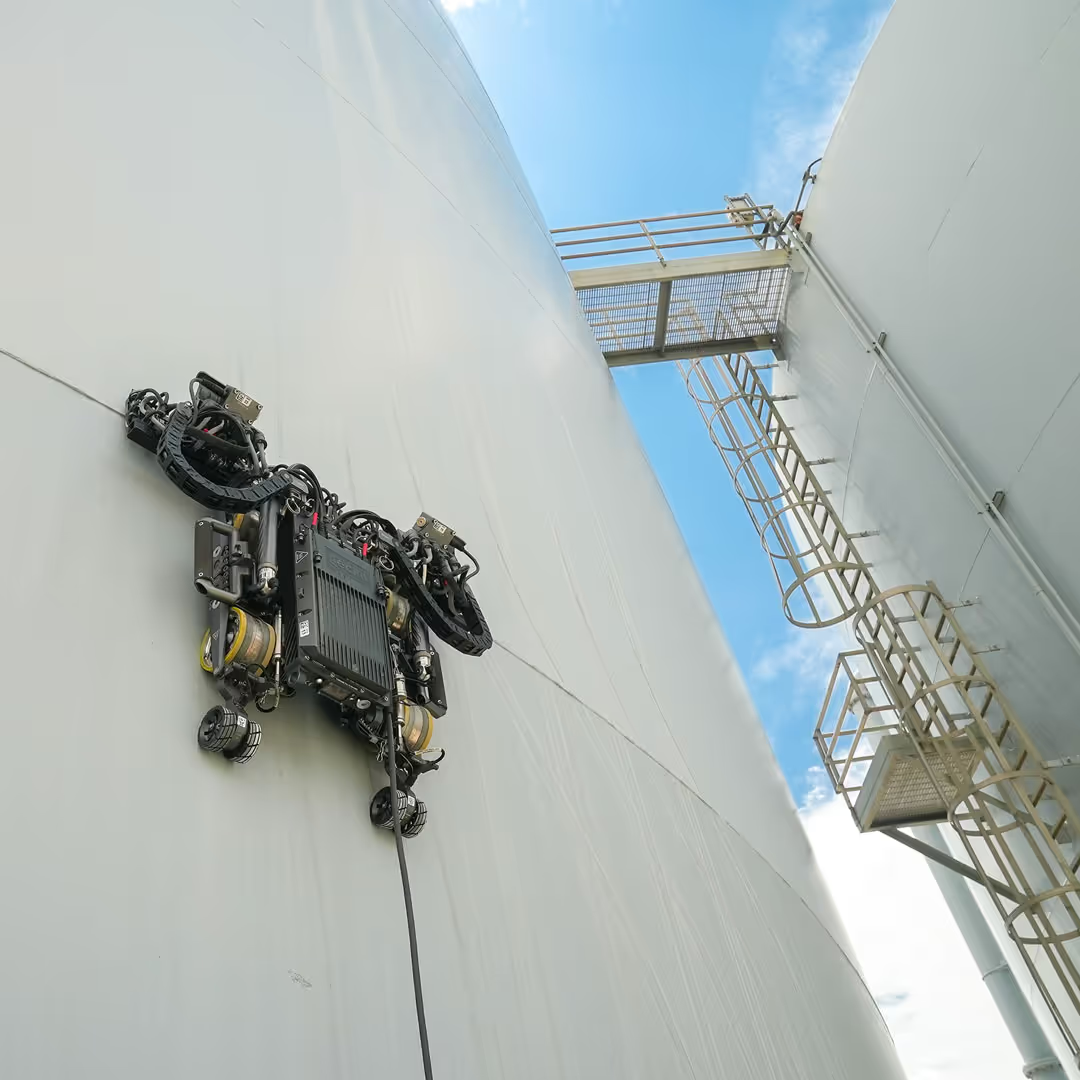
Cantilever's public description combines robotic data layers with facility records and supports analysis of asset condition. Gecko's separate aerial-scanning product connects capture with digitization and reports. These pages explain the supplier's broader approach, but they do not establish that every advertised sensing method is installed at Anduril. The partnership specifically identifies nondestructive testing. Readers should not infer a particular crawler, drone or sensor configuration from unrelated product imagery. Cantilever product description; Aerial scanning product description.
The component record must survive each handoff
A measurement is meaningful only for the component and configuration that produced it. If a part is reworked, the record needs to distinguish the before and after states. If the inspection method changes, the comparison needs to explain what remains equivalent. Manufacturing makes these requirements more demanding because many similar parts can be moving through the system at once. A misplaced record can be operationally worse than a delayed record: it can make the wrong part appear ready for the next step.
Autonomy also changes how exceptions are routed. A robot may collect the expected data successfully and still find a condition outside the normal acceptance path. The system needs to preserve that exception until a qualified decision is made. Automatically generating a report is not the same as authorizing the component's release. A production dashboard that combines the two can create pressure to treat unresolved evidence as completed work. Keeping the states distinct makes it easier to automate routine handling without weakening the review of unusual cases.
Rework is a particularly revealing test. The same part may return to inspection after a limited intervention, requiring comparison with its own earlier condition rather than with a generic ideal. A system that preserves that history can support a targeted decision; one that overwrites it can make a fast second inspection less informative.
Faster inspection and faster production are different outcomes
The partnership release also cites reductions of up to 90 percent in forged-component inspection timelines achieved with other defense-industrial customers. That figure is a Gecko claim about other work, not a measured result for this new Anduril integration. Its relevance is as a proposition to test in the new setting. Scope of the reported inspection-time claim.
Even a large reduction in measurement time need not produce an equal increase in factory output. Inspection might be the constraint, or a component could still wait for machining, materials, review or another operation. Conversely, a modest improvement in inspection predictability could matter if it prevents repeated scheduling disruptions. The Anduril case is interesting because it connects measurement directly with manufacturing software, offering a way to examine those dependencies. Demonstrating the connection would require a record of where waiting time moved, rather than a comparison of scanning speeds alone.
There is a useful analogy in the Federal Railroad Administration's Automated Track Inspection Program: collected measurements inform further inspection and maintenance decisions. That is a different industry and does not validate Gecko's process, but it illustrates why evidence collection and the resulting operational decision deserve separate treatment. NIST's robotics measurement work similarly makes performance evaluation an explicit engineering activity. Neither reference supplies an acceptance result for the Anduril installation. FRA inspection programme; NIST robotics measurement work.
What the next reported milestone needs to show
A useful follow-up would identify the component class and inspection operation in production, then show how the result reaches the person or system authorized to accept it. Repeated scans, disputed findings and reworked parts belong in that account because they reveal whether the digital record remains useful outside the normal sequence. None of those measurements requires treating an entire shipyard as autonomous. They instead establish whether a specific automated inspection reliably supports the next manufacturing decision.
Gecko and Anduril have reported an initial integration and a planned extension, not a completed transformation of maritime production. The practical significance lies in bringing inspection into the same information flow as manufacturing. If the first site establishes a repeatable connection between measurement, component identity and acceptance, it can provide a concrete basis for the next deployment. If those links still require extensive manual reconciliation, the robot may accelerate data capture while leaving the larger production constraint intact.
Sources & evidence
This archive preserves its original editorial date. Sources describe the events and announcements discussed; they do not establish today’s status.